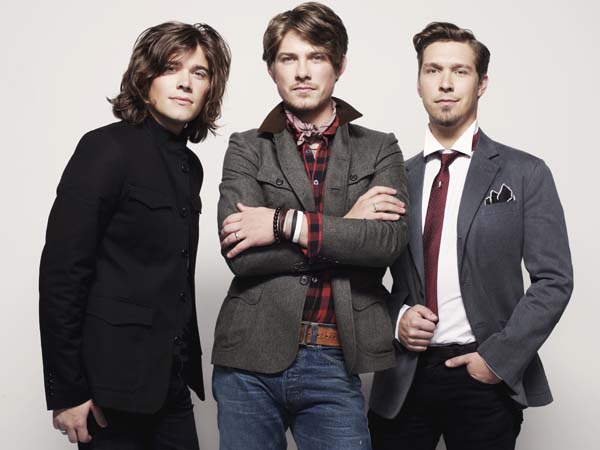
What happened when we met Hanson outside the House of Blues before their set last Sunday night? A lot of girls started screaming up the block and surprising, enlightening conversation with the brother band ensued. Yes, you read that correctly.
Photos: Michael Basu.
I will be the first person to tell you that I went into this Gone Gonzo episode with a ton of assumptions that weren’t exactly fair regarding Hanson. How could I not, really? When I was 11, I was patting myself on the back for stealing my dad’s Rolling Stones tapes out of his glove compartment and spending my allowance on Alanis Morisette’s Jagged Little Pill. I was nothanging posters of Taylor Hanson on my wall and making collages cut from the pages ofSeventeen and Tiger Beat. The blonde, bright-eyed brother band--whose zillion-watt smiles have been plastered all over every glossy rag under the sun and whose voices changed alongside ours as they were broadcast over Top 40 airwaves--will never be anything but the band that gave us “MMMBop” for plenty of people in my generation, myself included. As a pop culture fanatic, a musician and a music journalist, Hanson have never been on my radar as they’ve never resonated with my personal tastes.
And then, as Mikey and I were waiting outside the House of Blues, I realized I was a jerk.
Who the hell am I to write Hanson off as the MMMBop guys with the ponytails? I gave them credit for the hit that lay the foundation for their career without making an effort to listen to anything else they’d produced since then. With the line of fans growing in number as it crawled up Lansdowne Street, I lost a bit of my resolve on my previous stance as to how lame Hanson was. I mean, these dudes are known for that one song that they wrote when they were kids, but there’s gotta be more at play here than a single record to maintain a fanbase of this size years and years later, right? But critics and haters don’t just tear things apart for no reason, and I can’t just forget their cheesy reputation, right? Either way, as Isaac, Taylor and Zac got out of their tour bus and walked towards Mikey and I grinning and extending their hands, I just went into interview mode. These guys weren’t Hanson. They were a three-piece band headlining the House of Blues and I would chat them up about creative process, inspiration and guilty pleasures the same as I would WITH anyone else who writes their own music, treats their fans well and constantly works to improve their songwriting and playing skills. And I’d cut them some slack for the crappy hair cuts they sported when they were kids, because hell, I wasn’t exactly a fashion plate myself and none of us are proud of the duds we wore when we were 14.


Welcome back to Boston! We were just trying to figure out when your last show was here--2009? 2010?
Isaac: I think 2009 was the last time we played at the House of Blues, yeah.
Isaac: I think 2009 was the last time we played at the House of Blues, yeah.
Gotta be honest, I don’t even know where to start with you. We could start with the obvious and talk about where you’ve been since the MMMBop days--
Taylor: Hey, we could start with the obvious.
Taylor: Hey, we could start with the obvious.
You’ve been doing this for quite some time. You’ve also been brothers for quite some time (laughs).
Isaac: All of our lives, actually (laughs).
Taylor: Well, no, all of our lives we’ve been brothers. Because for a period of your life you were--
Isaac: Yeah, I had a period of my life where I was solo act. I was a solo act back in 1980, 1981 and 1982.
Zac: Almost three good years of solo-ness.
Isaac: All of our lives, actually (laughs).
Taylor: Well, no, all of our lives we’ve been brothers. Because for a period of your life you were--
Isaac: Yeah, I had a period of my life where I was solo act. I was a solo act back in 1980, 1981 and 1982.
Zac: Almost three good years of solo-ness.
It was an experimental phase, I guess. What’s the toughest thing about being in a band with your brothers?
Taylor: It’s a little hard because we’ve been in a band with our brothers for a long time too. It’s more like what’s it like not being in a band with our brothers. Because that’s what our experience has been.
Taylor: It’s a little hard because we’ve been in a band with our brothers for a long time too. It’s more like what’s it like not being in a band with our brothers. Because that’s what our experience has been.
Well, you know what that’s like, too, given your involvement with Tinted Windows [a side project made up of Taylor, James Iha of the Smashing Pumpkins, Adam Schlesinger of Fountains of Wayne and Bun E. Carlo of Cheap Trick--Ed.]
Taylor: That’s true—Which was different. The one thing that I noticed that was particularly different about that experience as it compares is that as a strength, and maybe sometimes it makes it complicated, but one of the strengths of being brothers is just shared experience. You have shared influences and shared backgrounds. When you go to do something like Tinted Windows, the only commonality is that you know music and there’s sort of the “musician’s code.” With us, there’s so many things that are just unsaid as far as making music goes, and I think that’s a strength. Sometimes it makes it complicated because you sort of read each other’s minds and people [in sibling bands] kind of fall back on crutches--sort of like, “Oh yeah, I’m gonna sing the melody, Isaac’s gonna sing the low part and oops—he didn’t sing the [low] part.” Because you’ve done stuff together for so long.
Taylor: That’s true—Which was different. The one thing that I noticed that was particularly different about that experience as it compares is that as a strength, and maybe sometimes it makes it complicated, but one of the strengths of being brothers is just shared experience. You have shared influences and shared backgrounds. When you go to do something like Tinted Windows, the only commonality is that you know music and there’s sort of the “musician’s code.” With us, there’s so many things that are just unsaid as far as making music goes, and I think that’s a strength. Sometimes it makes it complicated because you sort of read each other’s minds and people [in sibling bands] kind of fall back on crutches--sort of like, “Oh yeah, I’m gonna sing the melody, Isaac’s gonna sing the low part and oops—he didn’t sing the [low] part.” Because you’ve done stuff together for so long.
Isaac: I think bands for generations have proven more that family works in bands and music. In a lot of cases, more so than [when] it doesn’t.
Zac: Everyone from the Everly Brothers to the Beach Boys to the Jackson Five to Stone Temple Pilots. There’s some bad cases like Oasis, Kings of Leon, where people are exploding at each other, but that’s—if you compare that … there’s a rich history of siblings and brothers and relatives in bands because there’s such a genetic connection that is undeniable. The way you sound when you sing--there’s no closer vocal cords than those of brothers or siblings.
Isaac: Yeah. When we just answer the phone and say “Hello,” 50% of the time our Mom would mistake whose voice it was.
Zac: Do you think that makes you feel good? Or younger?
Isaac: I’m just trying to prove the point! (laughs)
Isaac: Yeah. When we just answer the phone and say “Hello,” 50% of the time our Mom would mistake whose voice it was.
Zac: Do you think that makes you feel good? Or younger?
Isaac: I’m just trying to prove the point! (laughs)
It’s interesting that you bring up the Followills and the Gallaghers in the sense that, yes, they definitely are “exploding” all over the place, and there are a lot of issues going on there. But I find that that almost works for them--they can tap into that in some of their music when they’re not self-imploding.
Zac: I just bring them up because they’re sort of famous train wrecks—publicly. Notoriously brawlers. When we fight, we’re brothers—we’re human beings. We fight and we have our struggles, we just don’t tend to do that onstage or in front of the camera, and I think in the last—Gosh, it’s scary to say this—but when Oasis first broke up it was almost twenty years ago. “Brothers fight, why don’t you fight?”
Isaac: Actually, we got that all the time, especially early on.
Taylor: And the main thing is, once you succeed, people want to talk about and break apart the different things or aspects of ex-bands, but we still see ourselves as us against the odds, as a unit. Yes we don’t like each other all the time, yes we don’t get along, yes we have days, but it’s more like us against the world versus us against each other. So I think that’s what probably keeps it together more than anything. It’s just—you know that your weird cousin is kind of awkward, and you joke about it with other relatives. But then when your other friend comes in and says “Man what a weirdo,” you and all your cousins are like--
Zac: I just bring them up because they’re sort of famous train wrecks—publicly. Notoriously brawlers. When we fight, we’re brothers—we’re human beings. We fight and we have our struggles, we just don’t tend to do that onstage or in front of the camera, and I think in the last—Gosh, it’s scary to say this—but when Oasis first broke up it was almost twenty years ago. “Brothers fight, why don’t you fight?”
Isaac: Actually, we got that all the time, especially early on.
Taylor: And the main thing is, once you succeed, people want to talk about and break apart the different things or aspects of ex-bands, but we still see ourselves as us against the odds, as a unit. Yes we don’t like each other all the time, yes we don’t get along, yes we have days, but it’s more like us against the world versus us against each other. So I think that’s what probably keeps it together more than anything. It’s just—you know that your weird cousin is kind of awkward, and you joke about it with other relatives. But then when your other friend comes in and says “Man what a weirdo,” you and all your cousins are like--
Isaac: YOU DON’T MESS WITH MY COUSIN!!! (laughs)
Zac: We’re the Danish Mafia.
… The Danish Mafia?
Zac: Yeah, we’re Danish. We’re actually pretty Danish. We were in Denmark and people were asking us questions in Danish. “Whoa! Whoa! We’re American!” (laughs)
Taylor: They’re the happiest people on the Earth.
Zac: Yeah, we’re Danish. We’re actually pretty Danish. We were in Denmark and people were asking us questions in Danish. “Whoa! Whoa! We’re American!” (laughs)
Taylor: They’re the happiest people on the Earth.
<object width="640" height="360"><param name="movie" value="http://www.youtube.com/v/TmG0DqhfDbY&rel=0&hl=en_US&feature=player_embedded&version=3"></param><param name="allowFullScreen" value="true"></param><param name="allowScriptAccess" value="always"></param><embed src="http://www.youtube.com/v/TmG0DqhfDbY&rel=0&hl=en_US&feature=player_embedded&version=3" type="application/x-shockwave-flash" allowfullscreen="true" allowScriptAccess="always" width="640" height="360"></embed></object>
So you say that your strong familial connection is a good, positive thing for working together as a band, and that you come from similar backgrounds--but you’ve gotta havesome creative differences.
Taylor: We have a lot of experience with each other, so a lot of times the guess for what the person is leaning towards is pretty good. It’s not necessarily always on, but…
Zac: There’s this documentary about our third record where in part of it we said “pessimist [Isaac], optimist [Taylor], realist [Zac].” And I realized that was slightly off. It’s idealist, optimist, realist. But essentially we all come at things from different angles--and that’s where the creative process is.
Taylor: Different way of getting to the destination, for sure.
Zac: I wouldn’t know [what it's like being in a band without brothers], to be honest. There are bands of not brothers like, “We’re like brothers, we’re so close!” And then you see bands of brothers and they say stupid stuff like “It’s beyond brothers!” It’s like, “You don’t know!” You’re not in a brother band. You’re not in a not-brother band. You just know what it’s like to be inHanson.
Taylor: We have a lot of experience with each other, so a lot of times the guess for what the person is leaning towards is pretty good. It’s not necessarily always on, but…
Zac: There’s this documentary about our third record where in part of it we said “pessimist [Isaac], optimist [Taylor], realist [Zac].” And I realized that was slightly off. It’s idealist, optimist, realist. But essentially we all come at things from different angles--and that’s where the creative process is.
Taylor: Different way of getting to the destination, for sure.
Zac: I wouldn’t know [what it's like being in a band without brothers], to be honest. There are bands of not brothers like, “We’re like brothers, we’re so close!” And then you see bands of brothers and they say stupid stuff like “It’s beyond brothers!” It’s like, “You don’t know!” You’re not in a brother band. You’re not in a not-brother band. You just know what it’s like to be inHanson.
Well, also, when you talk to a band breaking up or post-break up, creative differences frequently come up--”We’re not in the same spot right now, creatively” or something. But you guys have to go to Thanksgiving in the same place every year. You can’t exactly dothat.
Taylor: Well doing different things doesn’t necessarily mean conflict, I mean there’s—that’s just part of the process. We’re coming up on twenty years as a band, next year.
Taylor: Well doing different things doesn’t necessarily mean conflict, I mean there’s—that’s just part of the process. We’re coming up on twenty years as a band, next year.
You gonna have a big party?
Taylor: We should.
Isaac: We should, we’re kinda thinking about it.
Zac: We’re all getting spider tattoos on our elbow.
Taylor: We should.
Isaac: We should, we’re kinda thinking about it.
Zac: We’re all getting spider tattoos on our elbow.
Nice.
Taylor: ‘Cause that’s what really tough guys do, you know. And then I’m thinking I might also double it up with some barbed wire around my bicep.
Zac: Yeah I’m getting skulls on my knuckles, it’s gonna be awesome.
Taylor: ‘Cause that’s what really tough guys do, you know. And then I’m thinking I might also double it up with some barbed wire around my bicep.
Zac: Yeah I’m getting skulls on my knuckles, it’s gonna be awesome.
Do you guys have any ink, or no?
Isaac: No, no ink yet. It may happen one of these days…
Isaac: No, no ink yet. It may happen one of these days…
Cool (laughs.) So, you’re gonna do something big for your twentieth year as a band.
Isaac: Thinking about it!
Taylor: Just thinking about different things we would do. Twenty years is a big landmark, so we could do different things, and that wouldn’t necessarily be a sign of demise. That’s part of the flexibility and creative energy to make stuff work. If you weren’t continuing to try things you would just continue to tour on the one record you released—for twenty years. Even going out to make albums every couple years and continuing to do things as a band is that continual pursuit of being interested in something—excited and creating something. So if somebody wants to try something else, then that would be good.
Isaac: I think there’s a lot of room for us as a band to push the envelope a little bit farther, even just for the three of us, and I think that’s kind of part of why we never have felt particularly limited or something to that effect. In doing what we do, I mean, I think we’re always kinda feeling like we’ve got something that we haven’t done before. We express ourselves what we wanna get to the forefront. I think about the latest record, Shout it Out,and that was the easiest record we’ve ever made. It was kind of crazy.
Taylor: It definitely had the least drama around it. It had a pretty clear attitude and approach and style early on.
Isaac: We knew where we were going with it. It was exciting, like, “Wait a minute--maybe we’ve hit a little bit of stride here.”
Isaac: Thinking about it!
Taylor: Just thinking about different things we would do. Twenty years is a big landmark, so we could do different things, and that wouldn’t necessarily be a sign of demise. That’s part of the flexibility and creative energy to make stuff work. If you weren’t continuing to try things you would just continue to tour on the one record you released—for twenty years. Even going out to make albums every couple years and continuing to do things as a band is that continual pursuit of being interested in something—excited and creating something. So if somebody wants to try something else, then that would be good.
Isaac: I think there’s a lot of room for us as a band to push the envelope a little bit farther, even just for the three of us, and I think that’s kind of part of why we never have felt particularly limited or something to that effect. In doing what we do, I mean, I think we’re always kinda feeling like we’ve got something that we haven’t done before. We express ourselves what we wanna get to the forefront. I think about the latest record, Shout it Out,and that was the easiest record we’ve ever made. It was kind of crazy.
Taylor: It definitely had the least drama around it. It had a pretty clear attitude and approach and style early on.
Isaac: We knew where we were going with it. It was exciting, like, “Wait a minute--maybe we’ve hit a little bit of stride here.”
Well with that record, let’s state the obvious--you’re older. There’s something to be said for artistic and emotional maturity. You’re gonna write a different record at 25 than you were gonna write at 15 or at 10.
Zac: Yeah, sure. I’m surprised how well the records play together.
This tour, we’ve been playing old records. So, every night, fans are voting for which record they want to hear. And so, tonight we’re playing This Time Around, our second record. And we’ll play every song off of This Time Around as part of the set. And we’ll play other songs too, but it’s been surprising to me, like, when we play Middle of Nowhere, This Time Around, like old records—they don’t particularly sound like something we wouldn’t write now. They still sound …
Isaac: There were a few random lyrics that were like “Eh, yeah, I was sixteen when I wrote that.”
Zac: We just rhymed it, you know (laughs).
Isaac: --But not a whole lot.
Zac: I think the main difference for us is just … you’re pushing yourself and finding slightly different styles that you accentuate with each record. I think the latest record, you definitely hear our core ’60s pop influences. The horns—that stuff coming through, that you didn’t hear on other records as much. We’re still Hanson, but there’s just a little bit of a throwback quality to the record.
Isaac: I think the one thing that people have to—the tricky thing is as a musician, we speak in a broader way and in many cases we’re less subtle because we see the connections. Some people, if they listen to Middle of Nowhere, immediately they’re gonna hear the fact that Zac is 11 and Taylor is 14 and the voices are inherently higher.
Zac: And it was recorded in the ’90s.
Isaac: Yeah, and some of the production style--they’re gonna automatically assume that when they listen to Shout it Out that there’s these drastic differences, but actually when you break it down, it’s not really that different. There are some inherent things about it that—the Shout it Out record is definitely a more manic record … I guess what I’m really getting at is that--
Isaac: There were a few random lyrics that were like “Eh, yeah, I was sixteen when I wrote that.”
Zac: We just rhymed it, you know (laughs).
Isaac: --But not a whole lot.
Zac: I think the main difference for us is just … you’re pushing yourself and finding slightly different styles that you accentuate with each record. I think the latest record, you definitely hear our core ’60s pop influences. The horns—that stuff coming through, that you didn’t hear on other records as much. We’re still Hanson, but there’s just a little bit of a throwback quality to the record.
Isaac: I think the one thing that people have to—the tricky thing is as a musician, we speak in a broader way and in many cases we’re less subtle because we see the connections. Some people, if they listen to Middle of Nowhere, immediately they’re gonna hear the fact that Zac is 11 and Taylor is 14 and the voices are inherently higher.
Zac: And it was recorded in the ’90s.
Isaac: Yeah, and some of the production style--they’re gonna automatically assume that when they listen to Shout it Out that there’s these drastic differences, but actually when you break it down, it’s not really that different. There are some inherent things about it that—the Shout it Out record is definitely a more manic record … I guess what I’m really getting at is that--
Taylor: We’ve stayed the course from the beginning
Isaac: --Yeah.
Taylor: We’ve stayed the course. We’ve grown and definitely improved but with the body of work, if you look at each record, we’ve always been—our roots and our backbone comes from classic songwriters, melodic songwriters, rock and roll, soul music, and that’s always been there.
Isaac: --Little hint of gospel.
Taylor: So even those changes and stuff, that’s kind of what we see as the gold standard. Everything gets compared to that. It’s funny because, really, since the ’60s there was that whole idea of sex, drugs and rock and roll, and all the lifestyle I think that’s supposed to go with being in bands and stuff like that. But the thing was like, our whole thing has always been music first. It’s the great melodic song that everybody—like their grandma and the five year old and everyone in between—they all like it.
Taylor: We’ve stayed the course. We’ve grown and definitely improved but with the body of work, if you look at each record, we’ve always been—our roots and our backbone comes from classic songwriters, melodic songwriters, rock and roll, soul music, and that’s always been there.
Isaac: --Little hint of gospel.
Taylor: So even those changes and stuff, that’s kind of what we see as the gold standard. Everything gets compared to that. It’s funny because, really, since the ’60s there was that whole idea of sex, drugs and rock and roll, and all the lifestyle I think that’s supposed to go with being in bands and stuff like that. But the thing was like, our whole thing has always been music first. It’s the great melodic song that everybody—like their grandma and the five year old and everyone in between—they all like it.
But your fan base can grow with you, and they definitely did, but if the music was gonna suck or if there was a huge departure that was foreign to your fans or if you had been lying to yourselves in your own lyrics, I guess that wouldn’t really be the case. People would absolutely leave that.
Taylor: Yeah.
Zac: Yeah.
Taylor: Yeah.
Zac: Yeah.
The fact that you have such a loyal fanbase—which, you guys stepped out of a bus for a second… and I’m sure that happens to you every day, but that does not happen at the House of Blues when … I don’t know, when Adele was here you didn’t have people outside, freaking the fuck out. It’s an interesting kind of phenomenon that happened with you guys. The time where Middle of Nowhere came out, I mean, who else were you on the charts with?
Zac: Like, us, and the Spice Girls, and later Britney.
Isaac: And yeah, about a year and a half later, and then Britney and… N’Sync.
Taylor: Each time stuff has come along… inherently we’re compared to things. You compare things because you’re like “Oh this new band I like..” --Oh what is it? “Oh it’s Counting Crows meets Depeche Mode” but I think probably more than anything what’s made our connection with our fans work is that—not to be too frou frou—but you can’t really compare it to anything. It’s their personal connection with who they were at that time. The fact that we were interested in it was the going concern. Because at some point if we said, “Heeeey, we’ve got passionate fans. They love us, because they loved us when we were 14!” Then it would stop. The fact that you can reminisce and love that thing because you are also connected with something else is the only real ingredient that makes it work, because you can only run on one tank of gas for so long.
Zac: Like, us, and the Spice Girls, and later Britney.
Isaac: And yeah, about a year and a half later, and then Britney and… N’Sync.
Taylor: Each time stuff has come along… inherently we’re compared to things. You compare things because you’re like “Oh this new band I like..” --Oh what is it? “Oh it’s Counting Crows meets Depeche Mode” but I think probably more than anything what’s made our connection with our fans work is that—not to be too frou frou—but you can’t really compare it to anything. It’s their personal connection with who they were at that time. The fact that we were interested in it was the going concern. Because at some point if we said, “Heeeey, we’ve got passionate fans. They love us, because they loved us when we were 14!” Then it would stop. The fact that you can reminisce and love that thing because you are also connected with something else is the only real ingredient that makes it work, because you can only run on one tank of gas for so long.
Is it scary, dealing with the pressure and attention that comes with being a teen idol, if you will?
Zac: We always look at teen idols as sort of like acne. It’s just a phase. The only bad thing about teen idols is when people sort of discount what you do because of it. I think by definition when people say that it’s a little bit of a like, “Teen idols … they liked you because you were cute.” And I looked at pictures. We weren’t that cute.
Zac: We always look at teen idols as sort of like acne. It’s just a phase. The only bad thing about teen idols is when people sort of discount what you do because of it. I think by definition when people say that it’s a little bit of a like, “Teen idols … they liked you because you were cute.” And I looked at pictures. We weren’t that cute.
Isaac: No, we weren’t that cute.
Well, tell the girls downstairs—they would say otherwise. But do you know what I’m saying, though? Is there ever a time where you’re like, “This is too much!” and you need to step back for a minute?
Isaac: I think we’re pretty well beyond that.
Taylor: It’s a circus and it’s always been a circus.
Zac: There are crazy people, but that’s not the general fan. That’s just—there are people who have psychosis problems and then they attach that to you, and then they take their craziness and become crazy for you. But in general, no, I mean I think having passionate fans is good. There’s nothing worse than going to a John Mayer concert and the whole audience is like [miming standing with arms crossed] “What’s a lick? You call that a guitar lick? Come ON.”
Isaac: I think we’re pretty well beyond that.
Taylor: It’s a circus and it’s always been a circus.
Zac: There are crazy people, but that’s not the general fan. That’s just—there are people who have psychosis problems and then they attach that to you, and then they take their craziness and become crazy for you. But in general, no, I mean I think having passionate fans is good. There’s nothing worse than going to a John Mayer concert and the whole audience is like [miming standing with arms crossed] “What’s a lick? You call that a guitar lick? Come ON.”
We actually call that the Boston Effect. (laughs) I mean, Boston crowds can be tough sometimes.
Taylor: Do they do that at John Mayer concerts? I’ve never been to a John Mayer concert.
Zac: I’ve been to one John Mayer concert, and it was … I mean … like every dude in the audience … I mean our fans jump and they dance and they sing.
Taylor: Do they do that at John Mayer concerts? I’ve never been to a John Mayer concert.
Zac: I’ve been to one John Mayer concert, and it was … I mean … like every dude in the audience … I mean our fans jump and they dance and they sing.
They get into it.
Isaac: Well, we also give ‘em a hard time if they don’t.
Isaac: Well, we also give ‘em a hard time if they don’t.
Zac: But you’re supposed to go to a concert and enjoy yourself, not wait to be entertained. And I think there’s sort of an amazing way our fans connect with the music—you never wanna take that for granted. We can have boring cross-your-arms concerts when we’re old.
For sure.
Zac: I’m 25, LET’S GO.
Isaac: You asked about the teen idol thing and I think in a lot of ways too, we never cared about that. We never wanted that. We were never sitting around like “You know what we really want? Is to be on the cover of blah blah blah”
Zac: You don’t not want it either.
Isaac: You don’t not want it, but what I’m saying is, that wasn’t the goal. The goal was to write a song that everybody wants to sing, and we did that.
Zac: I gotta figure out how to be a teen idol when I’m no longer a teen.
Taylor: That would be impressive.
Isaac: Exactly.
Zac: It’s like, “Whoa.” 25…
Zac: I’m 25, LET’S GO.
Isaac: You asked about the teen idol thing and I think in a lot of ways too, we never cared about that. We never wanted that. We were never sitting around like “You know what we really want? Is to be on the cover of blah blah blah”
Zac: You don’t not want it either.
Isaac: You don’t not want it, but what I’m saying is, that wasn’t the goal. The goal was to write a song that everybody wants to sing, and we did that.
Zac: I gotta figure out how to be a teen idol when I’m no longer a teen.
Taylor: That would be impressive.
Isaac: Exactly.
Zac: It’s like, “Whoa.” 25…
Taylor: First 30-year-old teen idol.
Zac: It’s gonna happen dude. Watch out.
<object width="640" height="360"><param name="movie" value="http://www.youtube.com/v/56VPiS8dPDE&rel=0&hl=en_US&feature=player_embedded&version=3"></param><param name="allowFullScreen" value="true"></param><param name="allowScriptAccess" value="always"></param><embed src="http://www.youtube.com/v/56VPiS8dPDE&rel=0&hl=en_US&feature=player_embedded&version=3" type="application/x-shockwave-flash" allowfullscreen="true" allowScriptAccess="always" width="640" height="360"></embed></object>
Looking back, what was the hardest song to write? Is there one that stands out that’s like, “Holy shit, I can’t believe that actually made that on the record!”?
Taylor: That’s an interesting question. The hardest song?
Isaac: Well there are a lot of songs that have portions of them that sit around for, you know, several years in many cases. Like a song like “MMMbop,” the chorus sat around for about a year and a half, two years before the verses kinda were glued to that chorus. There’s a song off the fourth record called “Your Illusion” which was originally intended to be the title of the documentary that we ultimately released about the third record called Strong Enough to Break. And we started writing during that record but it didn’t come out for four and a half years—or actually, probably five years after it started.
Taylor: That’s an interesting question. The hardest song?
Isaac: Well there are a lot of songs that have portions of them that sit around for, you know, several years in many cases. Like a song like “MMMbop,” the chorus sat around for about a year and a half, two years before the verses kinda were glued to that chorus. There’s a song off the fourth record called “Your Illusion” which was originally intended to be the title of the documentary that we ultimately released about the third record called Strong Enough to Break. And we started writing during that record but it didn’t come out for four and a half years—or actually, probably five years after it started.
Any songs that especially hit you in the gut?
Isaac: I think lyrics are inevitably always the hardest.
Zac: Some of my favorite lyrics that come to mind are off the--
Taylor: The third record?
Zac: Well, no, I was gonna say “Me Myself and I” had some really good lyrics.
Taylor: Oh, oh yeah. Tells a story.
Zac: --A song that was sort of like “I don’t wanna screw this up.” It was a good idea that was sitting around for a long time. And it was sort of—finishing it was sort of like—you’ve gotta—part of finishing a hard song like that is pushing through it and forcing yourself to attach to a new lyric, to attach to new music because you’re so focused on what you’ve had for years …
Isaac: Or finding a lyric that you doesn’t fit.
Zac: The last verse of that song—that one—we were talking about it yesterday.
Taylor: “Maybe happiness is worth the chance of a bitter end.”
Zac: I think that’s a pretty poignant, good lyric that I’m proud of.
Taylor: If there’s a hint, or a theme of stuff that we end up talking about—not that there’s onetheme—but if there is one, it’s probably recognizing difficulty and sort of rising above it in some respect. And a lot of our songs--
Isaac: The righteous struggle.
Taylor: Those songs summarized in some ways that feeling that was painful—it wasn’t painful but it was painstaking.
Isaac: As ironic as it--
Zac: Righteous might not be quite a right word--just to struggle and persevere.
Isaac: Well the “worthy struggle” of persevering through difficulty. Interestingly though, in a weird way, “MMMbop” actually [was the] put-the-needle-through-the-fabric kind of song.
Zac: ‘Cause it’s such an early example.
Isaac: But it’s an early example of that, because the early example of it is asking the question “What really matters to you in your life?” Ironically it’s also a really kind of upbeat song, but there’s a lot of examples of that in Hanson music where it sounds like really kinda--
Taylor: To persevere is to be able to brush it off.
Isaac: Exactly.
Taylor: So yeah, a lot of the most upbeat songs are about how life kinda sucks sometimes.
Isaac: Exactly.
Taylor: I say that because that song is one where you were trying to figure out a way to say that in a different respect—the song is about—the last song on the new record Me, Myself and I, and it had been—it literally had been around for seven years, and it was always like “Oh this is gonna go on this record—nope.” And really deciding to finish it was, “Okay, what is the storyreally?” And it’s about the fact that, ultimately, you kind of all of a sudden have to be okay with being alone, with being solo.
Zac: And it’s also being okay with your part of the disaster of the love lost. The things lost. It’s like, I did what I could do and--
Taylor: Did my best.
Zac: In the last verse it says “Maybe happiness is worth the chance of a bitter end” and I ended up with a bitter end, but it was worth the chance for happiness. To go through this—and to end this way I can be sort of satisfied and in my own way happy knowing I gave it a shot rather than sort of the fear of loss. There’s another song called “Use Me Up” which is all about sort of how I would rather experience pain, experience lost love than be so afraid to not experiencing anything at all. Abuse me, rather than leave me alone.
Taylor: Better to have loved and lost than never to have loved at all.
Isaac: And it is interesting though because that is definitely a pretty consistent theme throughout. There were always probably three songs on any Hanson record that have that kind of theme.
Isaac: I think lyrics are inevitably always the hardest.
Zac: Some of my favorite lyrics that come to mind are off the--
Taylor: The third record?
Zac: Well, no, I was gonna say “Me Myself and I” had some really good lyrics.
Taylor: Oh, oh yeah. Tells a story.
Zac: --A song that was sort of like “I don’t wanna screw this up.” It was a good idea that was sitting around for a long time. And it was sort of—finishing it was sort of like—you’ve gotta—part of finishing a hard song like that is pushing through it and forcing yourself to attach to a new lyric, to attach to new music because you’re so focused on what you’ve had for years …
Isaac: Or finding a lyric that you doesn’t fit.
Zac: The last verse of that song—that one—we were talking about it yesterday.
Taylor: “Maybe happiness is worth the chance of a bitter end.”
Zac: I think that’s a pretty poignant, good lyric that I’m proud of.
Taylor: If there’s a hint, or a theme of stuff that we end up talking about—not that there’s onetheme—but if there is one, it’s probably recognizing difficulty and sort of rising above it in some respect. And a lot of our songs--
Isaac: The righteous struggle.
Taylor: Those songs summarized in some ways that feeling that was painful—it wasn’t painful but it was painstaking.
Isaac: As ironic as it--
Zac: Righteous might not be quite a right word--just to struggle and persevere.
Isaac: Well the “worthy struggle” of persevering through difficulty. Interestingly though, in a weird way, “MMMbop” actually [was the] put-the-needle-through-the-fabric kind of song.
Zac: ‘Cause it’s such an early example.
Isaac: But it’s an early example of that, because the early example of it is asking the question “What really matters to you in your life?” Ironically it’s also a really kind of upbeat song, but there’s a lot of examples of that in Hanson music where it sounds like really kinda--
Taylor: To persevere is to be able to brush it off.
Isaac: Exactly.
Taylor: So yeah, a lot of the most upbeat songs are about how life kinda sucks sometimes.
Isaac: Exactly.
Taylor: I say that because that song is one where you were trying to figure out a way to say that in a different respect—the song is about—the last song on the new record Me, Myself and I, and it had been—it literally had been around for seven years, and it was always like “Oh this is gonna go on this record—nope.” And really deciding to finish it was, “Okay, what is the storyreally?” And it’s about the fact that, ultimately, you kind of all of a sudden have to be okay with being alone, with being solo.
Zac: And it’s also being okay with your part of the disaster of the love lost. The things lost. It’s like, I did what I could do and--
Taylor: Did my best.
Zac: In the last verse it says “Maybe happiness is worth the chance of a bitter end” and I ended up with a bitter end, but it was worth the chance for happiness. To go through this—and to end this way I can be sort of satisfied and in my own way happy knowing I gave it a shot rather than sort of the fear of loss. There’s another song called “Use Me Up” which is all about sort of how I would rather experience pain, experience lost love than be so afraid to not experiencing anything at all. Abuse me, rather than leave me alone.
Taylor: Better to have loved and lost than never to have loved at all.
Isaac: And it is interesting though because that is definitely a pretty consistent theme throughout. There were always probably three songs on any Hanson record that have that kind of theme.
Zac: Ultimately, to survive in this business, you either become completely jaded or you have some sort of perspective that is—sort of persevering through.
There are so many things that don’t relate to the quality of your art or your shows that determine whether you’re successful or not. So you really have to find some way to have a perspective that will persevere, like, “You know, we’re just gonna go for the next one” because otherwise you’ll implode and you’ll quit.
Because there’s just too many things.
Yeah. People are constantly saying, “Okay, I’m putting the record out, making sure I’m doing something, making sure I’m moving.” But sometimes you just can’t move, and sometimes there are things that are keeping you from moving. Do you just sit there and wait it out or is that when you go back and start writing again? It’s just interesting to see how different musicians approach it.
Isaac: Nothing ever happens when you’re sitting still.
Zac: That’s why it’s good to name your band something sort of, like, Hanson. (laughs)
‘Cause that ain’t goin anywhere. (laughs)
Zac: I mean chances are, the worst thing that could happen is that some guy becomes a serial killer named Hanson. I would guess. Or some dictator.
Taylor: Or leader of some cult.
Zac: Yeah, that would be bad. If Charles Manson was actually Charles Hanson.
Taylor: That would make it hard to be Hanson.
Zac: That’s why it’s good to name your band something sort of, like, Hanson. (laughs)
‘Cause that ain’t goin anywhere. (laughs)
Zac: I mean chances are, the worst thing that could happen is that some guy becomes a serial killer named Hanson. I would guess. Or some dictator.
Taylor: Or leader of some cult.
Zac: Yeah, that would be bad. If Charles Manson was actually Charles Hanson.
Taylor: That would make it hard to be Hanson.
But you know, then you probably would have had a different name and you guys would’ve done something differently back when …
Isaac: Yeah, yeah.
Isaac: Yeah, yeah.
Dude, pop culture’s heavy, man.
Isaac: So heavy, man. [laughing]
Zac: We would’ve been Danson, and then Ted Danson would’ve been in every Hanson music video.
Isaac: So heavy, man. [laughing]
Zac: We would’ve been Danson, and then Ted Danson would’ve been in every Hanson music video.
That would’ve been kind of awesome, actually.
Zac: He would’ve had, like, an Oreck vacuum cleaner in every video, sponsored by Oreck and Ted Danson.
Taylor: Ted Danson was kind of the godfather of the band so we start off every video with kissing his ring.
Zac: LET’S START A BAND CALLED DANSON.
Zac: He would’ve had, like, an Oreck vacuum cleaner in every video, sponsored by Oreck and Ted Danson.
Taylor: Ted Danson was kind of the godfather of the band so we start off every video with kissing his ring.
Zac: LET’S START A BAND CALLED DANSON.
This is out of control.
Isaac: We are changing our name.
Besides your new Ted Danson inspired name, got any final words for your fans in Boston?
Taylor: We love you!
Zac: I am sorry for the content in this interview.
Taylor: Yes, we apologize. We cannot be held responsible, and you cannot prove that this was actually Hanson doing an interview. These photographs could be taken from a different location, and this recording …
Isaac: We are changing our name.
Besides your new Ted Danson inspired name, got any final words for your fans in Boston?
Taylor: We love you!
Zac: I am sorry for the content in this interview.
Taylor: Yes, we apologize. We cannot be held responsible, and you cannot prove that this was actually Hanson doing an interview. These photographs could be taken from a different location, and this recording …
We’ve been framed.
The final words to your Boston fans are “We’ve been framed”?!
Taylor: (laughs) Yes.
Taylor: (laughs) Yes.
![Picture of living area inside the home. [photo:www.williamsauction.com]](http://kotv.images.worldnow.com/images/15859289_BG2.jpg "Picture of living area inside the home. [photo:www.williamsauction.com]")
![Picture of the pool area by the cabana. [photo:www.williamsauction.com]](http://kotv.images.worldnow.com/images/15859289_BG1.jpg "Picture of the pool area by the cabana. [photo:www.williamsauction.com]")


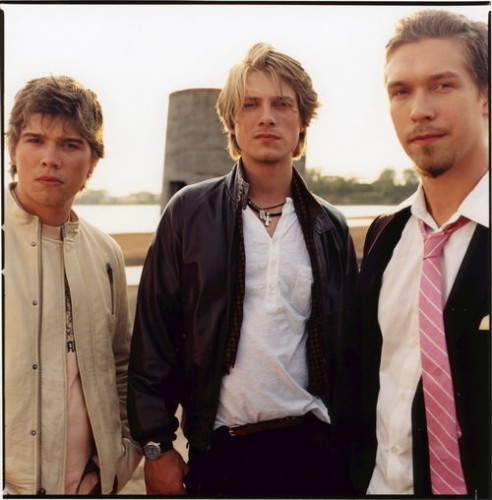



 The three brothers in the band Hanson grew up in the Tulsa area and
gained international recognition with their 1996 poppy tune "MMMBop."
The three brothers in the band Hanson grew up in the Tulsa area and
gained international recognition with their 1996 poppy tune "MMMBop."